
Criminal Court Cases in Allendale County
The South Carolina Circuit Court's Court of General Sessions hears felony-level prosecutions in Allendale County. The county belongs to the Fourteenth Judicial Circuit. Clerk of Court Elaine Sabb maintains the General Sessions docket, filed pleadings, orders, sentencing sheets, and certified copies at the Allendale County Courthouse. The clerk is the right custodian for the court file, but not for a police narrative or jail booking sheet. Those records remain with the agency that created them.
Lower-level criminal matters may stay in Allendale County Magistrate Court or a municipal court. Magistrates handle statutory summary jurisdiction, preliminary proceedings, bonds, and warrants. Town courts hear qualifying ordinance, traffic, and state-law matters within municipal authority. Court choice depends on the charge and statute, not just the everyday label "misdemeanor." The Judicial Branch municipal directory identifies local summary courts and helps prevent a search in the wrong docket.
The official municipal directory shows the local court structure as readers see it online.
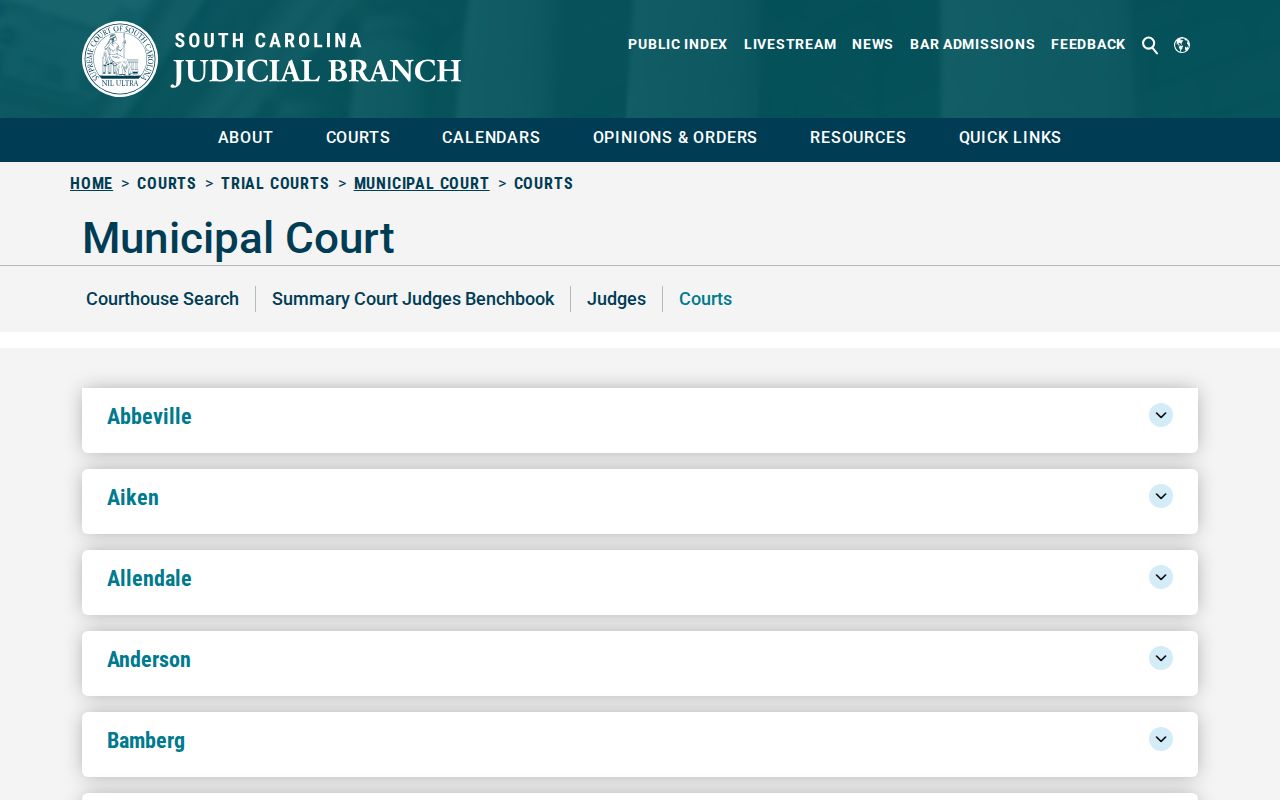
That directory is a routing tool. The actual case entry, document, or certified result still comes from the court that heard the matter.
Allendale General Sessions Record Counter
The main criminal case counter is at 292 Barnwell Highway, Allendale, SC 29810. Ask the clerk for a specific item whenever possible: indictment, warrant, plea or sentencing sheet, order, or certified disposition. A case number gives the staff the best starting point. For an older or absent online entry, provide the party name, approximate filing year, charge, and court division. Current copy and certification charges were not published in the researched official sources, so request a quote before ordering.
The Judicial Branch courthouse profile confirms the county, circuit, and clerk. Call ahead for hours because the source does not publish a dependable criminal-counter schedule. The same building also houses the Fourteenth Circuit Solicitor's Allendale satellite, but the prosecutor and clerk serve different roles. The clerk maintains the judicial file; the solicitor prosecutes the case and handles eligible General Sessions expungement requests.
Allendale County Case Record Searches
Begin with the free South Carolina Judicial Branch Case Records Search. Choose Allendale County, use a case number if one is known, and allow cookies, JavaScript, and pop-ups. A party-name search can return more than one person. Compare court agency, dates, charge text, and counsel before treating a result as the intended Allendale County criminal case.
- Open Case Records Search and locate Allendale County or the participating municipal court.
- Enter the case number, or search with the legal last and first names.
- Narrow the result with court agency, case type, or filing dates when those controls appear.
- Open the detail screen and read events, charge entries, status, disposition, and sentence separately.
- Ask the correct clerk for the named document or a certified copy when the index alone is not enough.
| Field Label | Type | Required | Format or Use |
|---|---|---|---|
| County, City, or ZIP Code | Text | Yes on landing page | Enter Allendale or a local place, then submit. |
| Case Number | Text | No | Best route when the full South Carolina case number is known. |
| Last Name | Text | Search key | Use the legal surname and confirm common-name matches. |
| First Name | Text | No | Narrows a party search. |
| Court Agency | Dropdown | No | Select the Allendale County or city court that owns the file. |
| Case Type | Dropdown | No | Available categories vary by the selected court. |
| Date Filed From/To | Date | No | Reduces broad result sets. |
Public Index Tools for Allendale Cases
The Public Index is a docket and data view, not a promise that every pleading is scanned. It can show the case number, court agency, filing date, party roles, counsel, charges, events, status, disposition, and sentence data when reported. Beginning January 1, 2026, the Judicial Branch removed home addresses from new and existing public-index cases. That change applies to the online view and should not be read as proof that every other court document contains the same redactions.
Use the separate Court Roster Search for scheduled activity. A roster is a calendar that can change, not a full Allendale County criminal history. The official roster interface shows the schedule-oriented search path.
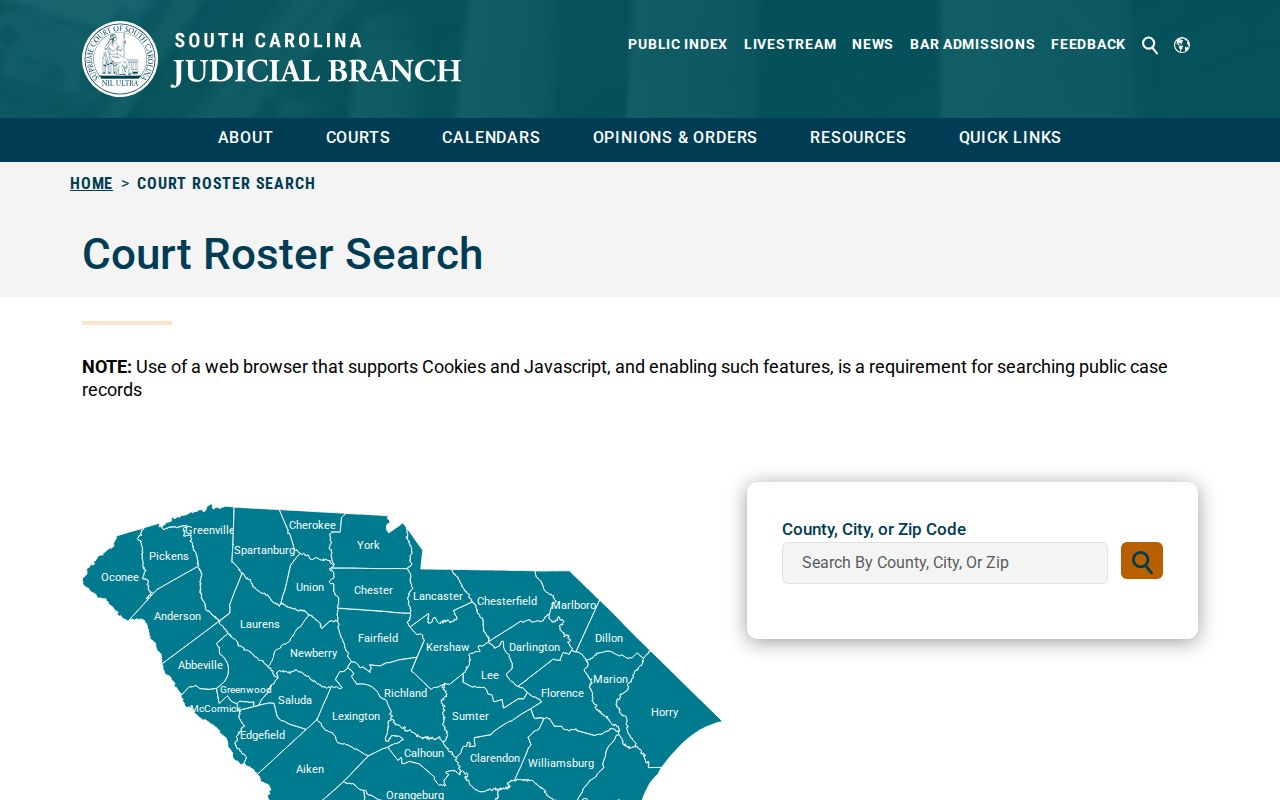
A missing roster entry does not erase an older, disposed, or unscheduled case. Return to the Public Index and clerk for the case record itself.
What a Criminal Case File Contains
An Allendale County court file records prosecution, not merely arrest. The first booking charge can change after review, indictment, plea talks, or trial. Read the disposition and sentencing sheet before describing the result. Public document images are not guaranteed online, so the index should guide a focused request to the clerk.
| Case Number and Court | Identifies the file and the General Sessions, magistrate, or municipal custodian. |
|---|---|
| Charging Document | A warrant, ticket, complaint, or grand-jury indictment setting out the formal allegation. |
| Docket Entries | Dated filings and court actions, including counsel, motions, hearings, pleas, and later proceedings. |
| Hearing Dates | Scheduled or completed appearances, which must be read with the current roster and event status. |
| Disposition and Judgment | The result for each charge, such as guilty, dismissed, acquitted, transferred, or nolle prosequi. |
| Sentence and Conditions | The court's term, fine, credit, probation, restitution, or other ordered conditions as recorded. |
When exact proof is needed for one's own record, request the certified sentencing or disposition document rather than relying on a screen print. The broader Allendale County criminal history overview explains why the court file and SLED repository report may differ.
Reading Allendale Court Dispositions
Several short terms carry large legal differences. "True bill" means a grand jury returned an indictment; it is not a conviction. "Nolle prosequi" means the prosecutor chose not to continue a charge at that point. A dismissal ends the charge without conviction through a different path, while an acquittal follows a not-guilty finding. "Pending" describes status and proves no guilt.
- Disposition
- The recorded outcome of a charge, including conviction and non-conviction results.
- Arraignment
- The hearing at which the accused is told the charge and enters a plea.
- Indictment
- The formal felony charging instrument returned by a grand jury.
- Sentencing sheet
- The clerk-held record that best states the exact conviction and sentence.
Compare every term with the charge row it belongs to. One Allendale County case can contain several counts with different outcomes.
Criminal Case Stages in Allendale County
A warrant, ticket, or arrest starts the local process, but the route then depends on the charge. Summary matters may remain with a magistrate or municipal court. Serious charges move into General Sessions, where the solicitor may present an indictment to the grand jury. The docket can then show counsel, hearings, motions, plea or trial, disposition, sentencing, and post-judgment work.
Case flow: Charges Filed › Arraignment › Pretrial › Plea or Trial › Disposition › Sentencing
Each stage answers a different question. A filed charge is an allegation. A plea or verdict decides guilt. The sentence sets the court's consequence. Appeals or later motions create more entries and may affect how a current result should be read.
Allendale Court Roster Versus Index
A Court Roster search helps locate upcoming General Sessions work, while the Public Index follows the case's docket history. Neither replaces the document in the clerk's file. The distinction matters when a hearing is moved or a disposed case no longer appears on a current calendar. Use the roster for "when," the index for "what has been recorded," and the clerk for the official copy.
The Town of Allendale has its own court channel. Its Municipal Court page publishes the local location and warns that court fines are no longer taken at the Police Department.
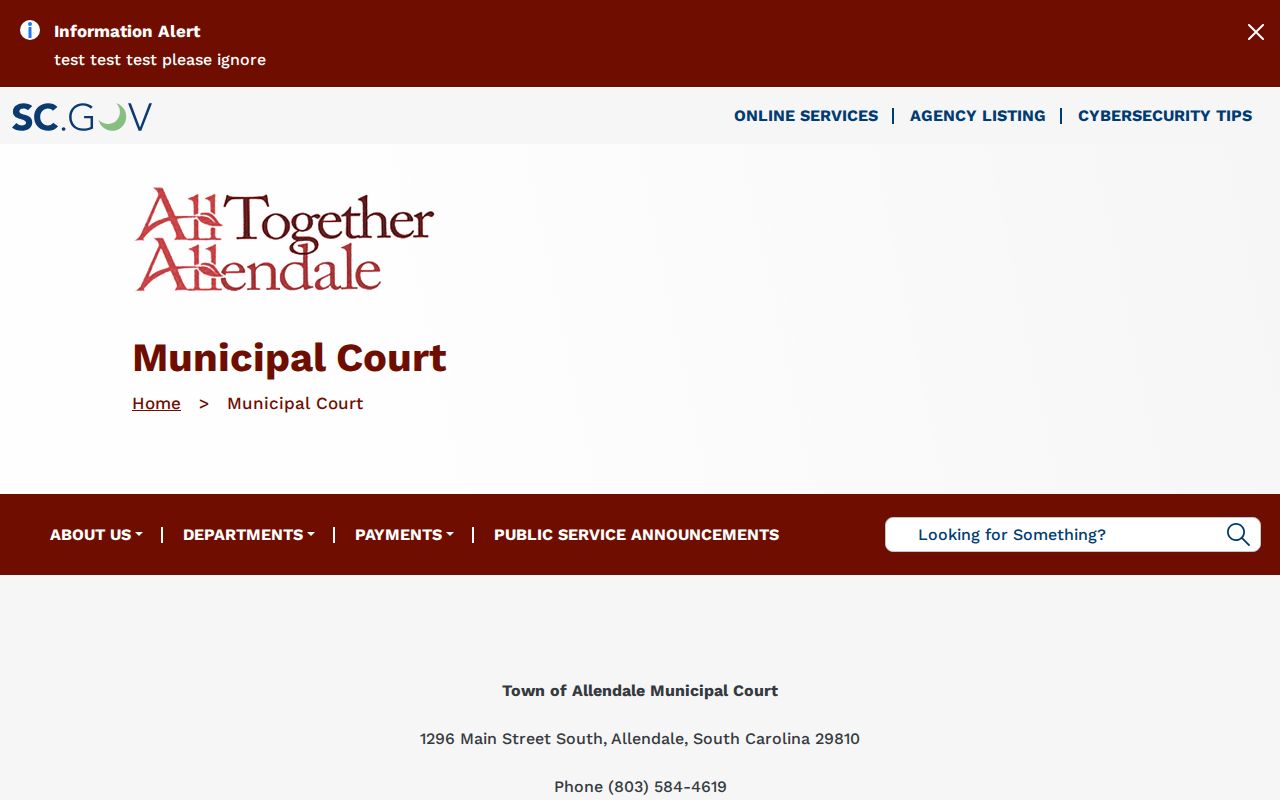
That warning shows why police records, court records, and payment tasks should not be assumed to share one counter.
Access Rules for Case Records
South Carolina courts provide public docket access subject to court rules, statutes, and technical limits. Juvenile matters, sealed or expunged cases, victim-identifying data, personal identifiers, and other protected content may be absent or redacted. The January 2026 home-address change also narrows the online data view. A blank search can therefore mean the search terms, court choice, reporting status, age, or legal restriction needs review.
For an Allendale County case that does not appear, contact the clerk of the likely court. Ask whether the case is archived, indexed under another number, held in a municipal system, or restricted from public display. The South Carolina Freedom of Information Act governs agency records, but a county-administration FOIA request is not a substitute for the judiciary's own case-record procedure. Never ask the clerk for the police report when the arresting agency created it.
Allendale Court Offices Beyond Clerk
The Fourteenth Circuit Solicitor prosecutes General Sessions cases across a five-county circuit and keeps an Allendale satellite in the courthouse. Its official contact page lists 843-779-8665 and directs callers to confirm hours.
The solicitor's office handles prosecution, victim services, and eligible General Sessions expungement work, but it is not the public docket custodian.
Defense contacts also have a separate role. The South Carolina Commission on Indigent Defense directory identifies the lawyers serving Allendale County.
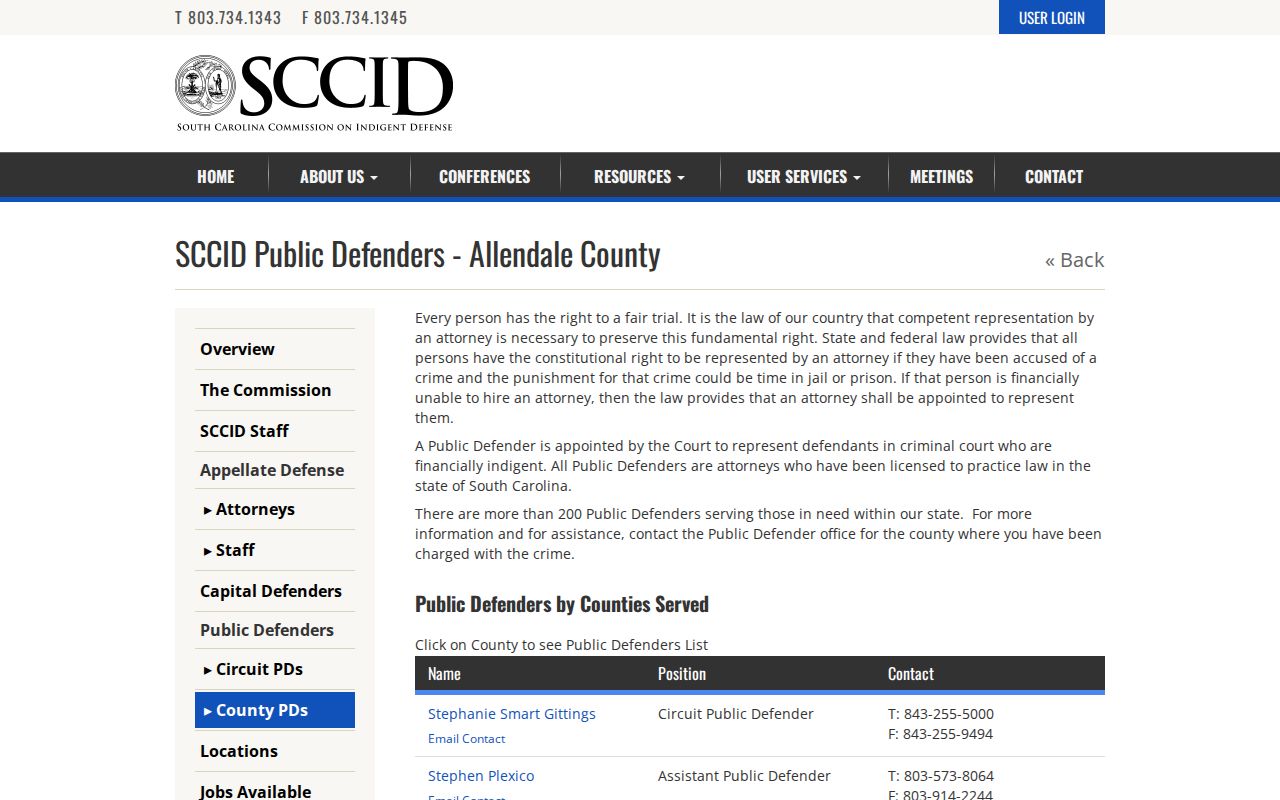
Public defenders represent qualifying appointed clients; they do not operate a general public court-record search. The clerk remains the source for the case file.